Probability
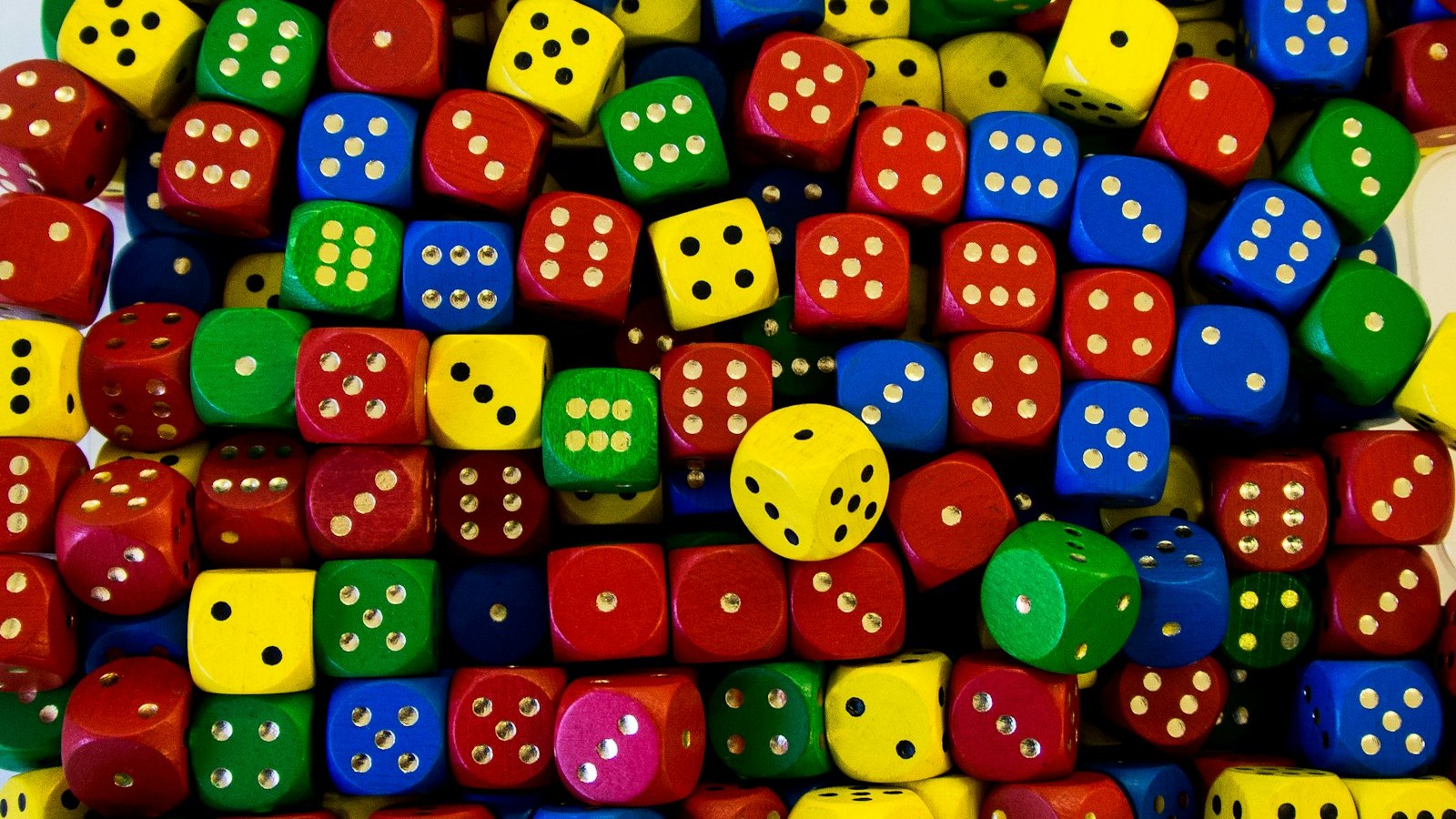
Photo by Richard Heinen on Unsplash, cropped.
The probability of an event describes how likely it is to occur.
The convention for describing the probability of an event is to write it as .
When there is a finite number of equally likely outcomes, the probability of an event is the proportion of those outcomes in which it occurs.
For example, a standard deck has 52 cards. The probability of drawing the ace of spades from a randomly shuffled deck is:
A fair coin has two equally likely outcomes, heads and tails, so:
We can also estimate probability from observed data:
The hat in indicates an estimate.
For example, the CDC reports 1,045 male births per 1,000 female births in the USA in 2024 (Table A) (Osterman et al., 2026). Dividing male births by total births gives:
This observed proportion can be used to estimate the probability that a future live birth in the USA will be a boy.
There's also a type of probability you'll often hear about day to day that expresses how strongly someone believes an event will occur. These estimates can draw on evidence, experience or just gut feel, without being calculated directly from observed outcomes across repeated experiments. This type of probability is called subjective probability.
For example, there's a lot of talk about the likelihood of AI causing human extinction or a similarly severe catastrophe, and many different public figures in AI have shared their estimates of P(doom).
Probabilities are always between 0 and 1, inclusive. Or in formal language:
4 Basic Rules of Probability
Complement Rule
The probability of event not occurring is . The event that does not occur is called its complement.
For example, let be the event of drawing the ace of spades from a randomly shuffled standard deck:
Then the probability of drawing any other card is:
Rule for Equally Likely Outcomes
If there are possible outcomes and they are all equally likely, each outcome has probability . An event can include more than one outcome, so:
Sticking with the cards, there are 13 spades in a standard deck. The probability of drawing any spade is:
Addition Rule of Probability
Two events are mutually exclusive if they cannot both occur.
For example, in Mario Kart, driving through an item box gives you an item.

Mario Kart 8 item box. Artwork © Nintendo (Nintendo).
To keep the maths simple, let's give our example box three possible outcomes and made-up probabilities. It gives exactly one item:
- A banana: .
- A shell: .
- A mushroom: .
Let be getting a shell and be getting a mushroom. These events are mutually exclusive: our box cannot give you both in the same pickup.
For mutually exclusive events, we can add their probabilities to find the probability of either occurring:
So the probability of getting either a shell or a mushroom is:
There is no overlap to count twice, because each pickup gives exactly one of these items.
Multiplication Rule of Probability
Two events are independent if knowing whether one occurred does not change the probability of the other.
For independent events, we multiply their probabilities to find the probability that both occur:
For example, suppose we roll a fair six-sided die twice, with the rolls independent of each other. The first result does not change the probability of rolling a six on the second roll:
Example: At Least One Six in Three Rolls
What is the probability of getting at least one six in three independent rolls of a fair six-sided die?
"At least one" includes getting a six once, twice or on all three rolls. It's easier to calculate the probability of the opposite event, getting no sixes, and use the complement rule:
On each roll, five of the six outcomes are not a six, so the probability of not rolling a six is . Getting no sixes means not rolling a six on the first roll and the second roll and the third roll. Since the rolls are independent, we multiply:
Then subtract from 1:
Simply adding three times would not work here. Getting a six on different rolls is not mutually exclusive: a sequence such as would be counted twice.
References
Michelle Osterman, Brady Hamilton, Joyce Martin, Anne Driscoll, and Claudia Valenzuela. Births: Final Data for 2024. Technical Report, National Center for Health Statistics (U.S.), June 2026. doi:10.15620/cdc/252440. ↩
Nintendo. マリオカート8:アイテム. Mario Kart 8: Items. Japanese-language official site. Item box artwork copyright Nintendo. Accessed 29 September 2026. URL: https://www.nintendo.co.jp/wiiu/amkj/item/index.html (visited on 2026-09-29). ↩